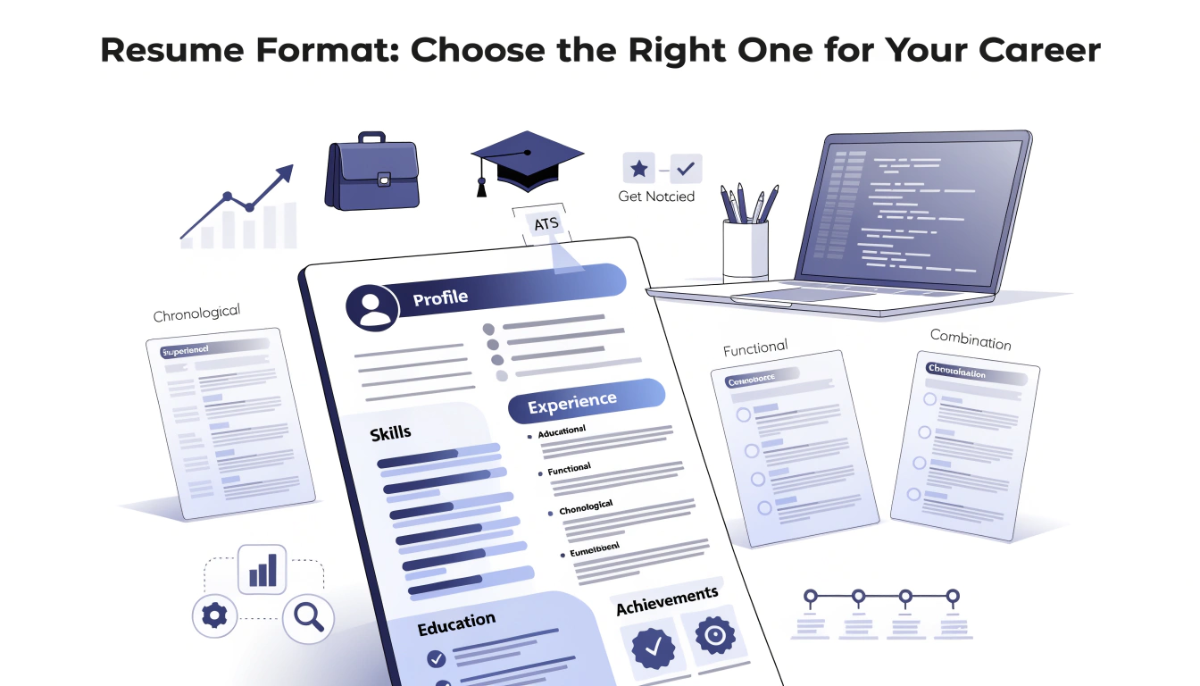
Every year lakhs of job seekers lose out on interviews not because they lack skills but because their resume format makes it hard for anyone to notice those skills. A good resume format is not about looking fancy or using bold colours.
It is about making it easy for a recruiter or an applicant tracking system to find what they are looking for in seconds. Whether you are a fresher writing your first resume or a professional switching careers the format you pick can decide if your resume gets opened or gets ignored.
In this blog we will look at the different resume format options and help you figure out which one actually works for your situation.
What Is a Resume Format and Why It Matters
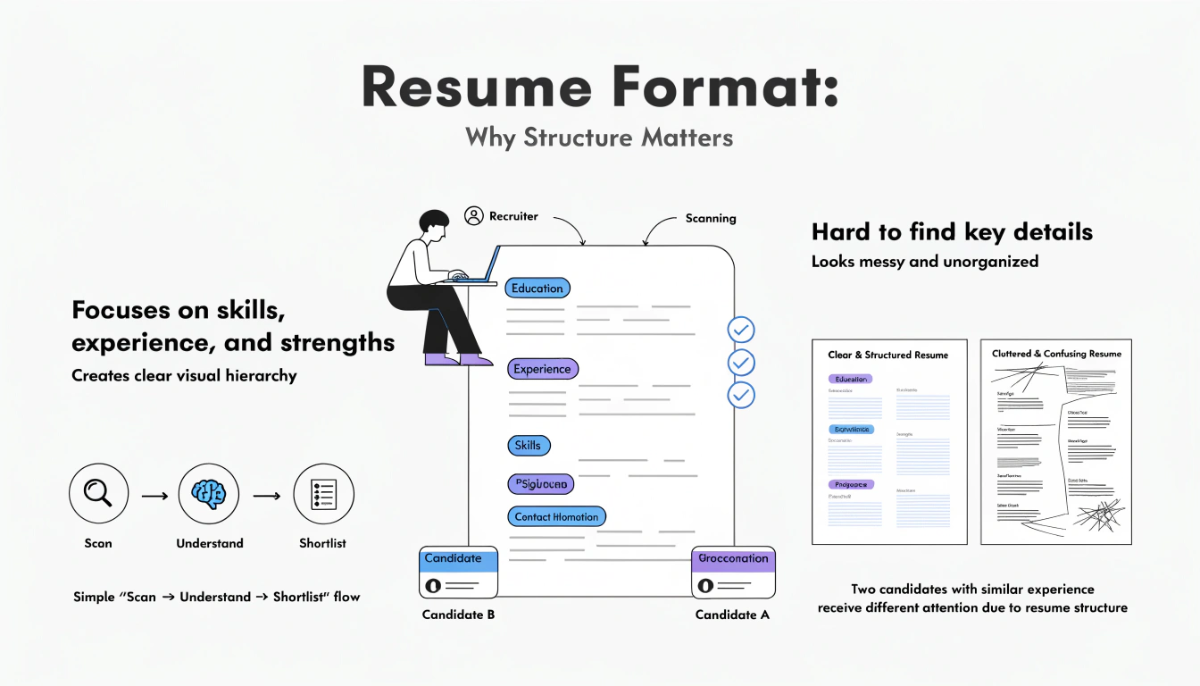
A resume format is simply the way you organise the information on your resume. It decides what comes first, how your work history is presented and how easy it is for a recruiter to scan through your background in the few seconds they usually spend on a first read. Recruiters go through hundreds of resumes for a single opening and most of them do not read every word. They scan. If your resume format is confusing or cluttered the recruiter moves on to the next one without a second thought.
This is why the resume format you choose matters as much as the content you put in it. Two people with the same experience and skills can get very different results simply because one used a format that highlighted their strengths clearly while the other buried them under poor structure.
Types of Resume Format You Can Choose From
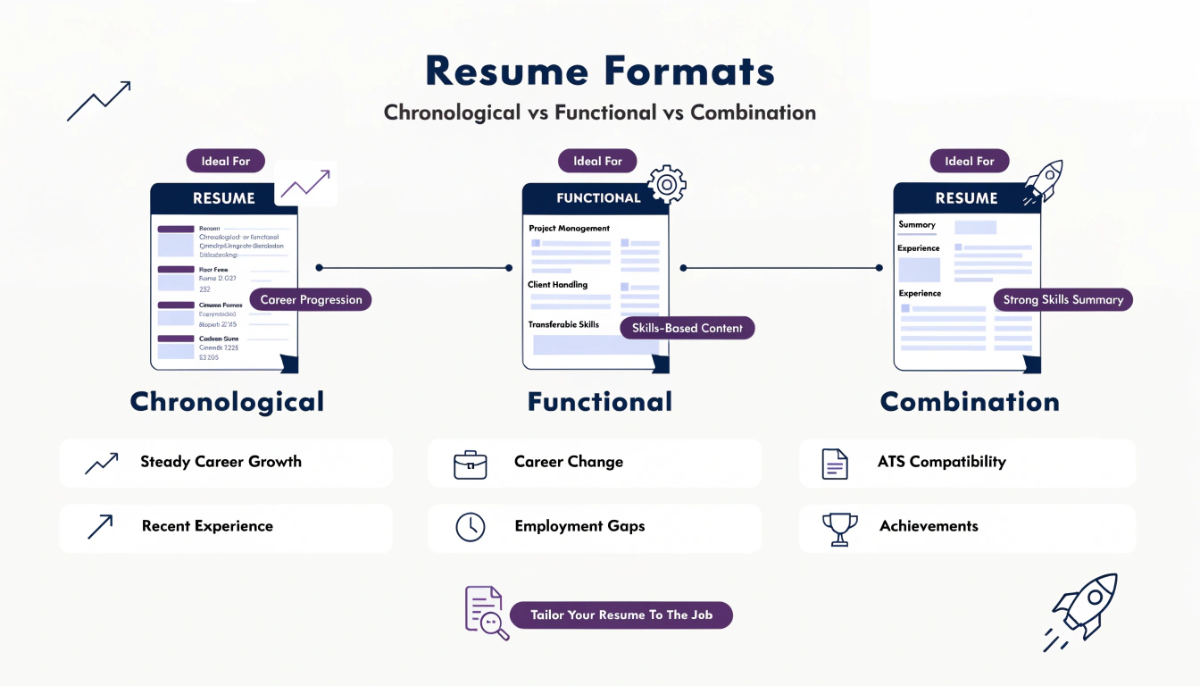
There is no single resume format that works for everyone. The right choice depends on your work history, the industry you are targeting and how you want to present your career story. Here are the three main types you should know about.
Chronological Resume Format
This is the most commonly used resume format and the one most recruiters are used to reading. It lists your work experience starting from your most recent job and moving backward. It works best for people with a steady career progression since it shows growth clearly and lets a recruiter quickly see where you have worked and for how long.
Best suited for professionals with consistent job history and few or no employment gaps since it highlights career growth in a natural order.
Preferred by most recruiters and ATS software because the structure is predictable and easy to parse automatically.
Not ideal for freshers with little to no experience or for people with long career breaks since the gaps become obvious.
Functional Resume Format
A functional resume format focuses on skills and abilities rather than a timeline of jobs. Instead of listing your work history first it groups your experience under skill categories such as project management or client handling. This resume format works well when your skills matter more than the order in which you gained them.
Useful for career changers who want to highlight transferable skills instead of drawing attention to unrelated past job titles.
Helps people with employment gaps since the focus shifts away from dates and toward what you can actually do.
Some recruiters view this format with suspicion since it can look like an attempt to hide gaps or a lack of experience, so use it carefully.
Combination Resume Format
As the name suggests this resume format blends the chronological and functional styles. It opens with a skills summary and then follows with a detailed work history in chronological order. This gives you the best of both worlds since it highlights your strengths upfront while still giving recruiters the timeline they expect.
Works well for experienced professionals who want to lead with achievements before getting into the job by job details.
Gives you room to tailor the skills section for each job application without rewriting your entire work history.
Takes slightly more effort to structure well since you need both a strong summary and a clean chronological section.
How to Pick the Right Resume Format for Your Career Stage
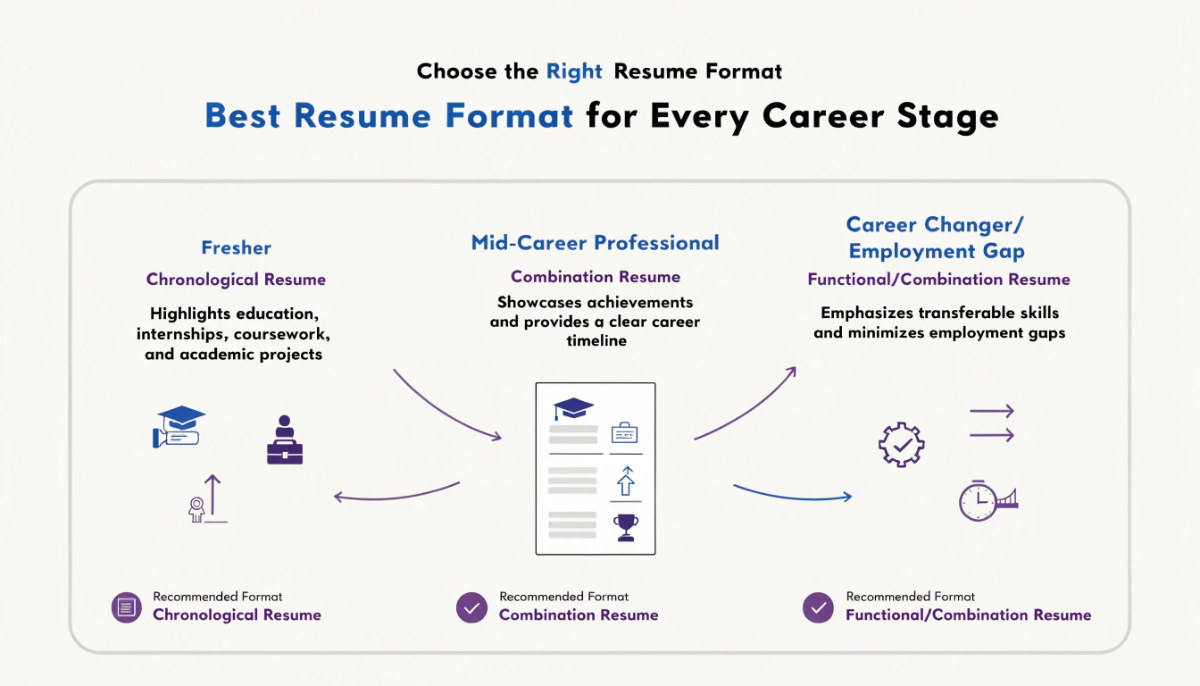
The best resume format is not the one that looks the most impressive. It is the one that fits where you are in your career right now. Here is how to think about it based on your stage.
Freshers and Recent Graduates
If you are a fresher with little to no full time work experience a chronological resume format built around your education, internships and projects usually works best. Since you do not have years of job history to worry about you can lead with your degree, relevant coursework and any internships or academic projects that show practical skills.
Mid-Career Professionals
If you have a few years of steady experience a combination resume format tends to work well since it lets you show a strong summary of achievements followed by a clear chronological record. This resume format helps you highlight promotions, key projects and measurable results without losing the timeline recruiters expect to see.
Career Changers and Those With Employment Gaps
If you are switching industries or have gaps in your work history a functional or combination resume format usually serves you better than a purely chronological one. It lets you put your transferable skills front and centre instead of drawing attention to a career path that may look inconsistent on paper.
Key Elements Every Resume Format Should Include
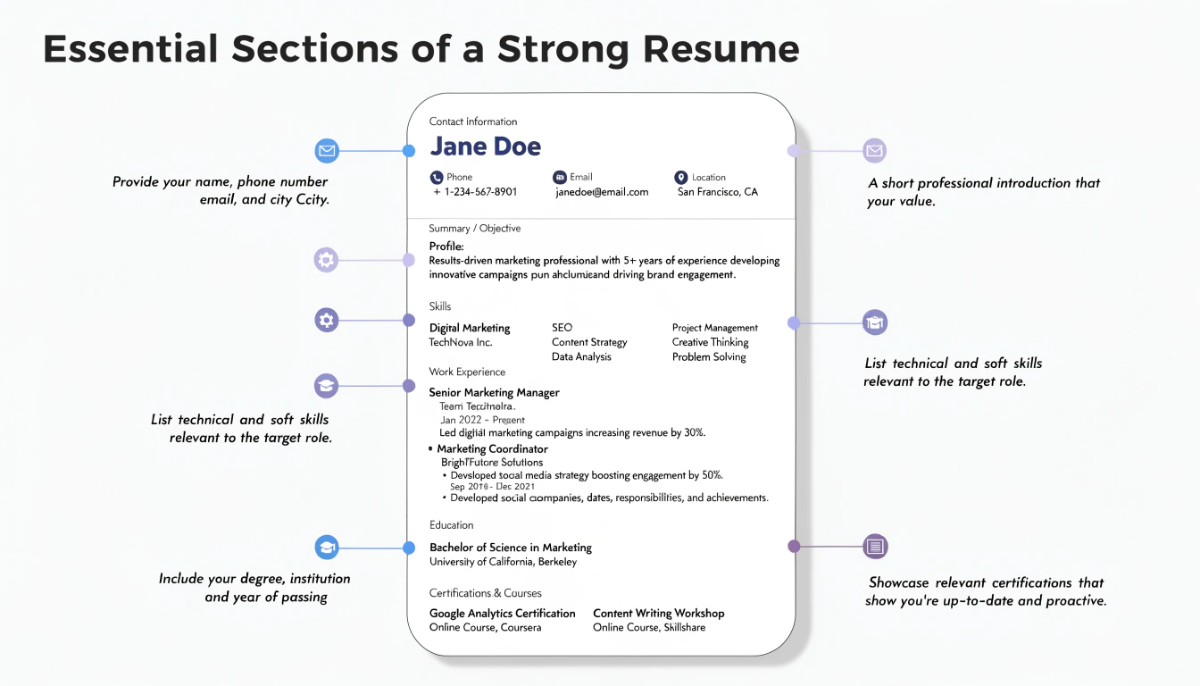
Regardless of which resume format you choose certain sections need to be present for it to work well. Missing any of these can weaken your resume no matter how good the structure looks.
Contact information at the top including your name, phone number, email and city so recruiters can reach you without searching.
A short summary or objective of two to three lines that tells the recruiter who you are and what you bring to the role.
A skills section listing both technical and soft skills relevant to the job you are applying for.
Work experience with clear job titles, company names, dates and bullet points describing your responsibilities and results.
Education details including your degree, institution and year of passing, especially important for freshers.
Certifications or additional courses if they are relevant to the role since they show initiative and updated knowledge.
Common Resume Format Mistakes That Cost You Interviews
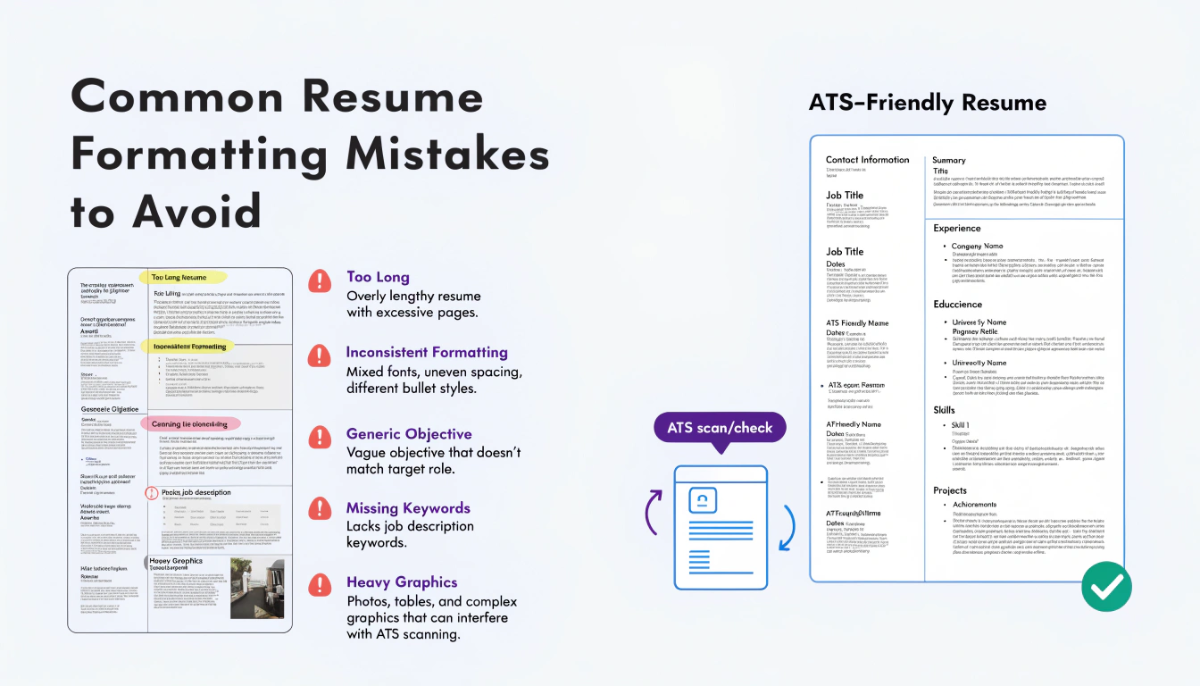
Even a well written resume can fail if the resume format has basic mistakes. Here are the ones that show up most often and quietly hurt your chances.
Making the resume too long, since most recruiters prefer one page for freshers and two pages at most for experienced professionals.
Using inconsistent fonts, spacing or bullet styles across sections which makes the resume look unpolished and rushed.
Writing a generic objective that could apply to any job instead of tailoring it to the specific role you are applying for.
Leaving out keywords from the job description, which can cause your resume to get filtered out before a human even sees it.
Using photos, tables or heavy graphics that look nice to the eye but often break when scanned by automated systems.
Resume Format Tips to Beat the ATS
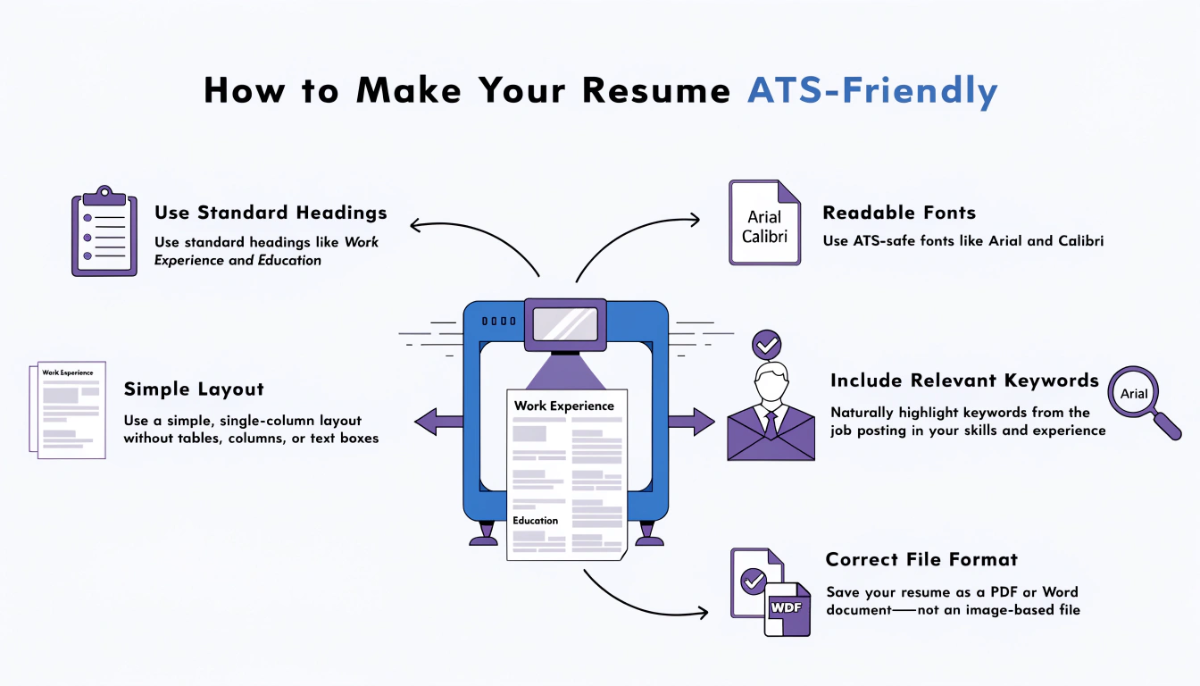
Most companies today use an applicant tracking system to filter resumes before a recruiter reads them. If your resume format is not ATS friendly you could get rejected automatically even if you are a strong fit for the role. A few simple changes can make a big difference here.
Stick to standard section headings like work experience and education instead of creative titles that the software may not recognise.
Avoid tables, columns and text boxes since many ATS tools cannot read information placed inside them correctly.
Use simple, widely available fonts such as Arial or Calibri instead of decorative fonts that can render incorrectly.
Include keywords from the job posting naturally in your skills and experience sections to improve your match score.
Save your resume in the file format the job posting asks for, usually PDF or Word, and avoid image based files entirely.
How Career Tigers Can Help You Get the Resume Format Right
Picking the right resume format is only half the job since the content inside it needs to be just as strong. This is where a platform like Career Tigers comes in.
Career Tigers works with students and early career professionals to build resumes that are structured correctly, written clearly and tailored to the roles they are applying for. Instead of guessing which resume format suits your background you get guidance built around your actual profile, which saves time and reduces the trial and error most job seekers go through on their own.
If you are unsure whether your resume format is working against you it is worth getting a second opinion before you send out dozens of applications. A small fix in structure can be the difference between a resume that gets read and one that gets skipped.
Final Thoughts
There is no universal best resume format since the right choice always depends on your experience, your career goals and the industry you are targeting. What stays constant is the need for clarity. A resume format that is easy to scan, free of clutter and built around the right keywords will always perform better than one that just looks visually appealing. Take the time to choose a format that fits your career stage, keep the structure clean and update it regularly as your experience grows.
Remember that your resume is often the very first impression a recruiter forms about you, long before an interview call ever happens. Getting the resume format right will not guarantee a job on its own, but it removes one of the biggest barriers between your skills and the opportunities you are aiming for. Review your resume every few months, adjust it for the roles you are applying to and treat the format with the same seriousness as the content inside it.
Did you find this useful?
Comments (0)
You must be logged in to leave a comment.
Log In to Comment